
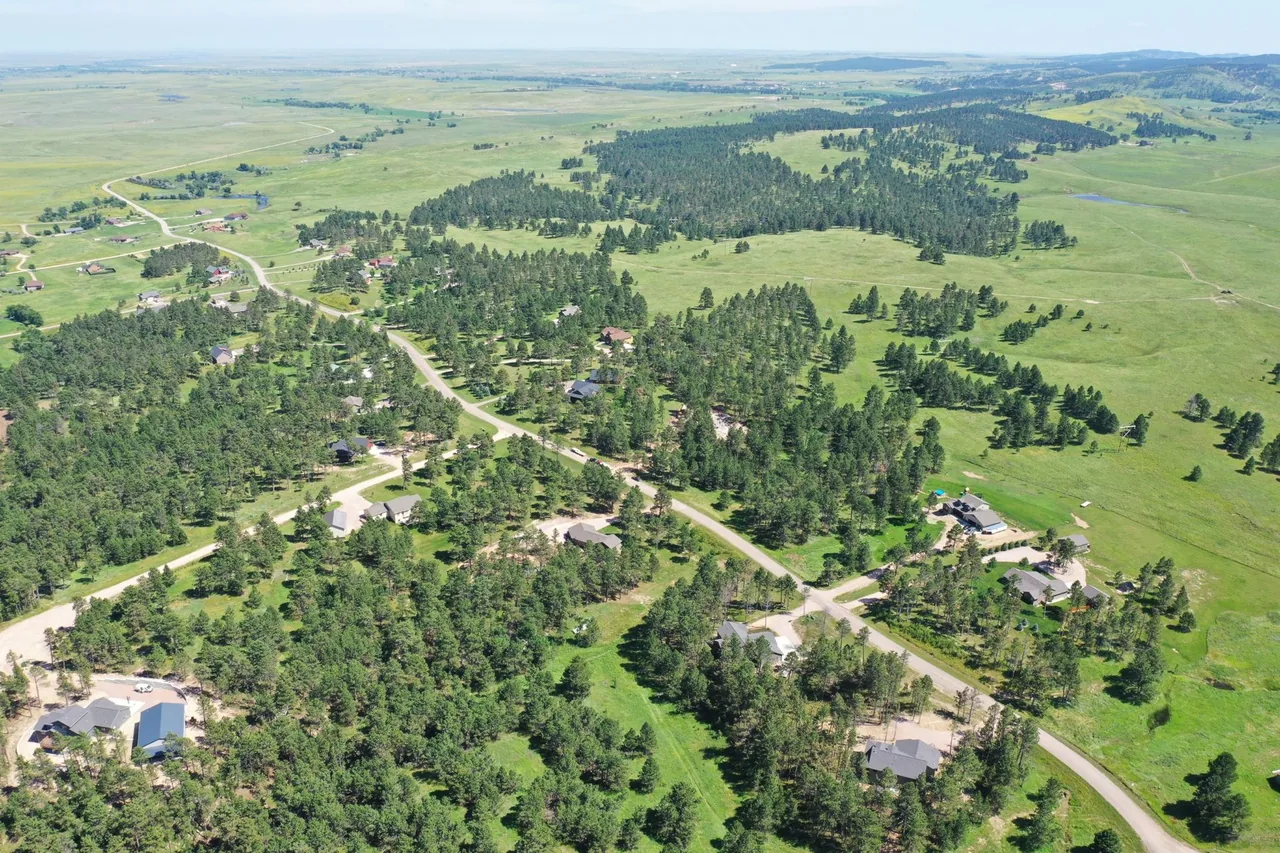
Buying and selling land and acreage in the Black Hills
Last updated November 2026
Land is the reason a lot of people move here. Space! A view! Nobody's porch light in the window. It is also the purchase where a nice view can hide the most expensive problems. A house in town comes with water, sewer, a paved street and a plow. On acreage, each of those gets bought separately, and some of them might not be there. (The view is always there. That is how it gets people.)
This page is for people buying land or a home on acreage in western South Dakota: retirees who want elbow room, out-of-state buyers who have never owned a well, people who want horses or a shop, and anyone planning to build. It is also for landowners getting ready to sell. I grew up here. I fly my own drone. (Yes, the drone comes to work.) And I map every acreage listing I sign. Below is how I work through a piece of ground before anybody writes an offer.
Every rule below links to the office that wrote it. Rules change, and the answer that counts is the one in writing, for the exact parcel.
The short version
Five things decide whether a piece of land is a good buy. I check them in this order:
- Water. Is there a well, how deep, how many gallons a minute, and what is in the water?
- Septic. Is there a permitted system sized for the house, or a place a new one can legally go?
- Access. Is there recorded legal access, and who maintains and plows the road?
- Restrictions. Covenants, zoning, easements and who has platting authority.
- Risk and cost to own. Floodplain, wildfire, insurance, taxes, and what it costs to get power and internet to the site.
If any of the first three fails, the price does not matter. (Not even a great price.)
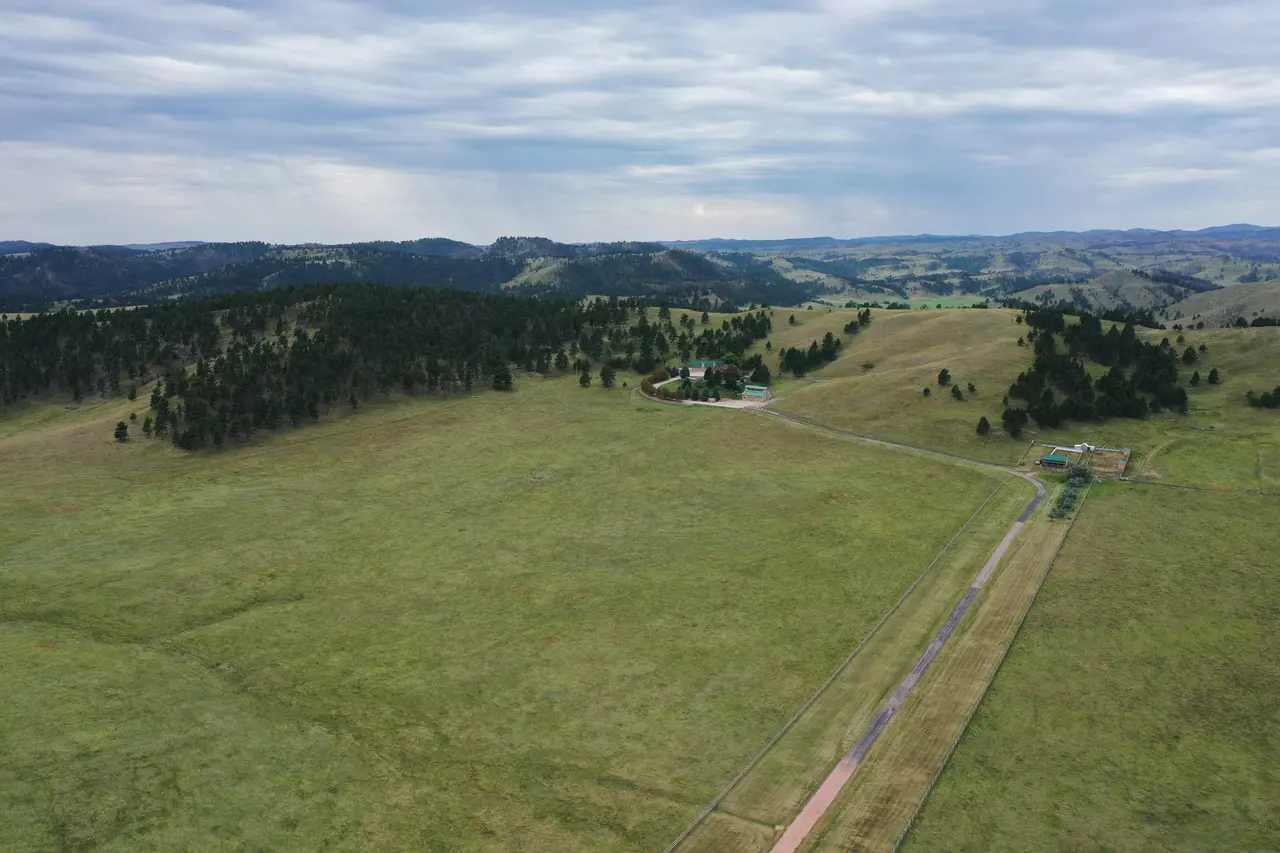
Water: wells, well logs and water rights
Start with the well log. Licensed drillers file a well completion report with the state, and the South Dakota Department of Agriculture and Natural Resources (DANR) keeps them in a public database, searchable by map, legal description or county. Anybody can look! A log shows depth, construction and the driller. The state is upfront about its limits: drillers were not required to file reports before 1975, and a report can be missing or filed under a wrong legal description. A missing log is not a red flag by itself. It is a reason to test.
Is a water right needed? For a normal household well, no. DANR says a water right is needed for all uses except domestic uses, and it describes domestic use as household water, a noncommercial garden or trees up to one acre, and stock watering. The state's general ceiling for domestic use is 25,920 gallons a day or a peak pump rate of 25 gallons a minute. Past that, or for irrigation or commercial use, a permit to appropriate water is required. A domestic well can also be registered with the state for $25 to document its location, output and water quality. Cheap insurance if a bigger user ever shows up nearby. (Twenty-five dollars. I have paid more for lunch.)
Who can drill. DANR's guidance: unless the owners are drilling their own well, the job goes to a driller licensed in South Dakota, and the well has to meet the state construction standards. The state defines an "adequate well" as one built so the pump inlet can be lowered at least 20 feet into the saturated part of the aquifer.
One county rule that changes the math. In Meade County, Ordinance 33 says a private well cannot be installed on a property under 9 acres, and not at all where an existing community water system can serve the lot. Picturing a 3 or 5 acre homesite with its own well near Piedmont, Summerset, Black Hawk or Sturgis? Find out which water system serves it first. Before the falling-in-love part!
Questions I ask on every well:
- Is there a well log, and does the depth and yield match what the seller says?
- When was the water last tested, and for what? (South Dakota's seller disclosure form asks for the date and result of the last water test.)
- Is the well shared? If so, where is the recorded agreement covering cost, repairs and access?
- Is the property on a community or association system instead? Then I want the rate sheet and recent minutes, because that is buying into a small utility.
- Has a cistern or hauled water ever been used? That says something about yield.
A flow test and a lab water test during the inspection period are standard on my deals. Every one! More detail: Wells and water systems in the Black Hills.
Septic: who permits it and who inspects it
About a quarter of South Dakotans are on a septic system, according to DANR. Outside city sewer it is simply how a house works. Not glamorous. Very important! The state writes the design rules (Administrative Rules chapter 74:53:01) and certifies installers through the South Dakota Plumbing Commission. The counties issue the permits, and each one handles a sale differently.
The state lot-size floor. A septic system cannot go on a lot under 20,000 square feet. If the drinking water comes from a private well on the same lot, the minimum is one acre (ARSD 74:53:01:16). Counties can be stricter, and several are.
County by county
| Pennington | Meade | Custer | Lawrence | |
|---|---|---|---|---|
| Who permits septic | County Planning | County Equalization and Planning | County Planning | County Planning and Zoning |
| What happens at a sale | An Operating License is required before the sale or transfer of a lot with a system. The owner or agent notifies Planning first. License fee $20. | Seller must have the system inspected by a state certified installer licensed with Meade County, and the tank pumped within 6 months before the sale. Report is filed with the county. Ag-classified land used for ag is exempt. | No sale-time rule that I could confirm on the county's site. Ask Planning. | No sale-time rule that I could confirm on the county's site. Ask Planning and Zoning. |
| Who does the inspection | A certified liquid waste pumper, hired privately, completes the county's Observation Form | A DANR certified installer licensed with the county | A privately hired septic inspector | A privately hired septic inspector |
| Good to know | County staff will attend the observation at no extra cost, on request | Private wells are not allowed under 9 acres | Only state certified installers may install or repair. The county says it has no zoning and no building codes. | Every system needs a county septic permit and a design by a registered professional engineer before a building permit. Application fee $10. |
| Office | 900 Concourse Dr, Rapid City | Sturgis, 605-347-3818 | 420 Mt Rushmore Rd, Custer, 605-673-8174 | 90 Sherman St, Deadwood, 605-578-3871 |
Even where the county does not require it, I order a septic inspection with the tank pumped on every rural purchase. It is the only way to see the inside of the tank. (Not a view anybody asks for. Worth every dollar.)
Bedrooms matter. Systems are sized to the house. If the plan is to add bedrooms or a second dwelling, ask the county what the existing system is permitted for before counting on it. More detail: Septic systems 101.
Legal access, easements and private roads
A road a truck can drive on and a road an owner has a legal right to use are two different things. (Ask anybody who found out the hard way.) Before an offer I want to see how the parcel reaches a public road on paper.
- Recorded access. A deeded or platted road, or a recorded easement. The title commitment shows what is recorded. A two-track the neighbors "have always let people use" is not access a lender or title company will rely on.
- Section lines. South Dakota law puts a public highway along every section line, 66 feet wide, unless it has been vacated or relocated (SDCL 31-18-1 and 31-18-2). A right of way on paper is not a built road, though. Somebody still has to build and maintain it.
- Landlocked parcels. State law gives the owner of an isolated tract a way to secure an easement to a public highway (SDCL 31-22-1), with size conditions. It is a legal process, not a quick fix. Talk to a real estate attorney before buying anything that depends on it.
- Forest Service ground. If the only way in crosses National Forest, the access question belongs to the Forest Service, not the county. Ask for the recorded easement or special use authorization.
- Easements across the land. Utility lines, a neighbor's driveway, a shared well line. South Dakota law says the extent of an easement is set by the terms of the grant (SDCL 43-13-5), so read the document, not the summary.
Who maintains the road
South Dakota's required seller disclosure asks two questions that matter here: is the road at the end of the driveway public or private, and is there a written road maintenance agreement? If the road is private, I want that agreement in hand before the inspection period ends. I look for:
- Who is a party to it, and does it bind future owners?
- How costs are split, and what happens when someone does not pay
- Who decides on gravel, grading and plowing, and how
- Whether a road district exists (a road district can assess owners; a handshake cannot)
No agreement on a shared private road is a finding. Ask the lender early whether the loan requires one.
Covenants or no covenants
Buyers ask for "no covenants" all the time. Freedom! Here is what each side really delivers, for the buyer and for the neighbor.
| With recorded covenants | Without covenants | |
|---|---|---|
| What can be built | Often a minimum house size, materials and outbuilding limits | Whatever county or city rules allow |
| Animals, shops, RVs, rentals | Frequently limited. Read the document. | Up to zoning, if there is zoning |
| Splitting the lot later | Often prohibited | Up to the county or city subdivision rules |
| What the neighbor can do | Same limits apply to them | Same freedom applies to them |
| Who enforces | Other owners or an association, in court if it comes to that | Nobody, beyond government rules |
Two things people miss:
- Covenants and an HOA are not the same thing. Plenty of Black Hills subdivisions have recorded covenants and no active association. The covenants still run with the land.
- Changing them is hard. Under a 2024 state law, if a recorded declaration has no amendment clause, it takes a vote of two-thirds of the owners to modify it (SDCL 11-5-11).
The seller disclosure asks whether the seller knows of covenants and says to attach a copy. I get the recorded version from the title company either way and read it before the offer, not after. More: Covenants vs. HOAs, and zoning by county.
Zoning, the three-mile ring and subdividing
Zoning depends on the county. Pennington and Lawrence counties have zoning ordinances. Custer County's planning office states plainly that there is currently no zoning and no building code in the county; its Ordinance 2 covers subdivision, septic and approaches instead. Meade County regulates through its subdivision ordinance (Ordinance 20) and its wastewater and water ordinance (Ordinance 33). "No zoning" does not mean "no rules." It means the rules live in different documents.
The three-mile ring. State law lets a city approve subdivision plats up to three miles outside its limits once it adopts a plan, a major street plan and a subdivision ordinance for that area (SDCL 11-6-26). Where two cities are within three miles of the same ground, each city's reach ends at the midpoint unless they agree otherwise. In practice, a parcel in the county near a city that uses this authority can have the county handling zoning and permits while the city decides the plat. My county by county post lists what each Black Hills city publishes about its ring. If the land is anywhere near a town, call the city first and ask whose plat process applies.
Can I split it later? Maybe. It depends on the jurisdiction, the minimum lot size, whether each new lot has access, water and a septic site, and whether covenants prohibit it. I never promise a split, and I do not let "can be subdivided" go in a listing until the planning office has answered in writing. The county planning offices in the table above will talk it through before anything gets filed. The long version, county by county: Can I subdivide my land?
Property taxes: ag, owner-occupied, or neither
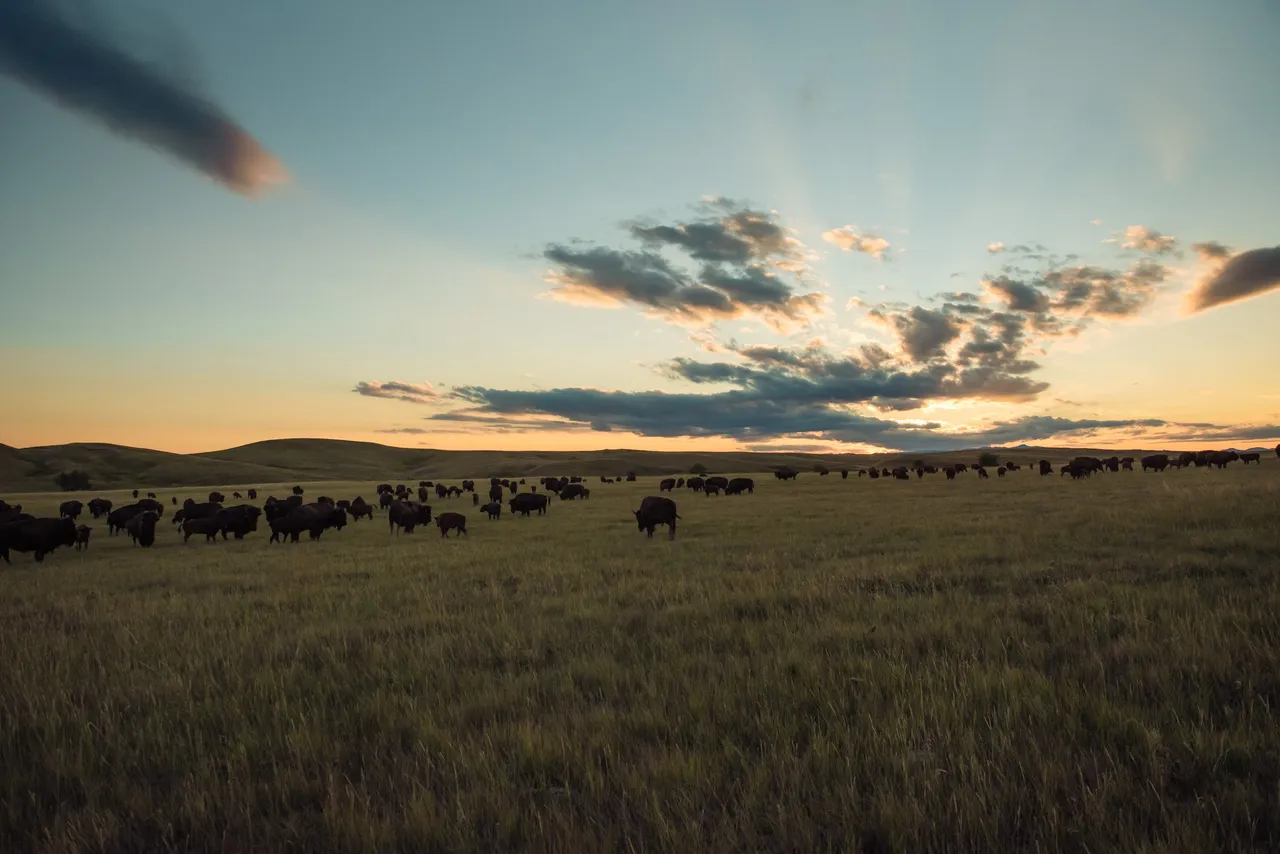
South Dakota taxes property by classification, and on acreage the classification can move the bill more than the price does.
- Agricultural. Land is ag for tax purposes only if its principal use is agriculture for intended profit AND it meets one of two tests: at least $2,500 of gross ag income from the land in three of the last five years, or at least 20 acres (or part of a management unit of 80 acres or more). Counties may raise that acreage minimum, up to 160 acres (SDCL 10-6-112). A few horses for fun on 10 acres is not agriculture under that definition.
- Owner-occupied. A primary residence can be classified owner-occupied, which the Department of Revenue describes as a status that lowers the property taxes on it. The owner files a certificate with the county Director of Equalization by March 15, and a person can have only one (SDCL 10-13-39 and 10-13-40).
- Neither. Bare land nobody farms and nobody lives on, a second home, or a rental generally falls outside both.
What that means for a buyer: the seller's tax bill does not automatically come with the land. If the seller had ag status or owner-occupied status and the buyer will not qualify the same way, the bill changes. Call the county Director of Equalization with the parcel number and ask how it is classified today and what would change it. For anything beyond that, talk to a CPA. More: South Dakota property taxes for Black Hills buyers.
Fences and livestock
Two South Dakota rules cover most fence questions.
- Partition fences are shared. Unless neighbors agree otherwise, each owner is liable for half the cost of building and maintaining a partition fence between their lands. The exception: nobody owes if neither owner keeps livestock on the tract and neither gets another substantial benefit from the fence (SDCL 43-23-1). The statute even assigns halves: each owner builds the half on the right, standing on their own land and facing the line (SDCL 43-23-2).
- What counts as a legal fence. Whatever the neighbors agree on. If they do not agree, the statute describes one in detail: posts at set spacing and at least four strands of barbed wire at 18, 28, 38 and 48 inches (SDCL 43-23-3 and 43-23-4).
- Livestock owners answer for trespass. A person whose cattle, horses, buffalo, sheep, goats or swine trespass on someone else's land, fenced or unfenced, is liable for the damage. The exception is where the injured owner kept an inadequate partition fence after written notice (SDCL 40-28-4).
So South Dakota is not an open range, "fence them out or live with it" state under that statute. The livestock owner carries the liability, and neighbors split the partition fence. What I look at on a showing: where the fence sits compared with the surveyed line (they often differ), what shape it is in, and whether a grazing lease comes with the land.
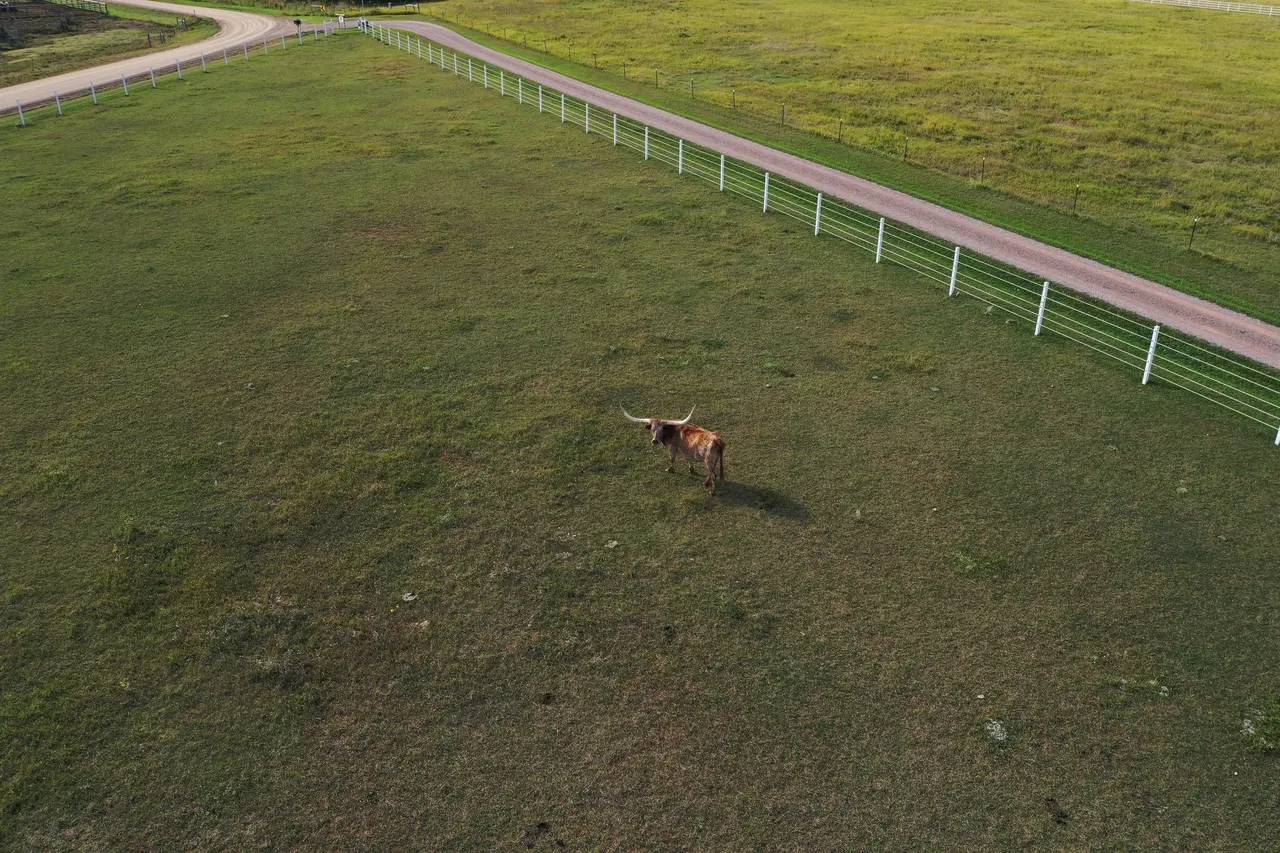
Mineral rights
Minerals can be owned separately from the surface, and in the Black Hills, with its mining history, they often were split off decades ago.
- A title commitment will show a recorded mineral reservation or severance. Read the exceptions page.
- Under South Dakota law, a mineral interest that has not been used for 23 years or more is abandoned, and title to it vests in the surface owner. "Use" includes production, a recorded conveyance or lease, or a recorded statement of claim (SDCL 43-30A-2 through 43-30A-4).
- Whether a specific interest has lapsed is a title and legal question. I flag it; a real estate attorney answers it.
- Some parcels around Lead, Deadwood and the central Hills trace back to patented mining claims. Those can carry odd-shaped boundaries and old surveys, which makes the survey more important and more expensive.
Surveys and corner pins
- Find the pins before the offer. I walk the corners with buyers when the pins can be found. If they can't, that settles whether to order a survey.
- Only a licensed land surveyor establishes a boundary. Locating or re-establishing a property line is the practice of land surveying under state law (SDCL 36-18A-4). A fence, a GIS map and my drone lines are all approximations.
- County GIS is a sketch. Parcel lines on an online map can be off by many feet. Good for orientation, not for building a shop next to the line.
- Ask what the seller has. The disclosure asks whether the seller has a location survey or a copy of the recorded plat, and whether there are known boundary problems or encroachments.
- When I push for a new survey: metes-and-bounds or mining claim descriptions, fences that do not match the map, a planned building near a line, or any future split.
Floodplain
Creeks here are small until they aren't, and a lot of the prettiest acreage sits along one.
- Look up the address on the FEMA Flood Map Service Center. It is free and takes two minutes.
- The seller disclosure asks whether the property is in a flood plain.
- If the map shows a flood hazard area on the parcel, ask the lender and the insurance agent what that means for the loan and the premium before making an offer.
- A floodway is stricter than a floodplain. Pennington County, for one, will not license a vacation rental where any part of the dwelling sits in a floodway.
- The counties administer floodplain rules through their planning offices. Call before planning a building, a bridge or a culvert near a creek.
Wildfire and forest health
Pine to the back door is the look people want and the thing insurers ask about first.
- Insurance first. Get a quote on the exact address before going under contract, or at the latest inside the inspection period. Ask what the carrier requires for clearance, roof and access.
- Help exists. South Dakota Wildland Fire runs a Hazardous Fuels Mitigation Cost-Share Program for private land in the wildland urban interface. The program's page describes 80 percent cost-share on eligible thinning and fuel break work (it is not meant for large treatments over 10 acres), and lists fuels staff in Rapid City, Custer and Lead who can help with property assessments and Firewise information.
- What the state's guidance looks like on the ground: a noncombustible zone in the first 5 feet around the house, grass kept under 4 inches for at least 30 feet, firewood and propane tanks at least 30 feet from the home, tree crowns at least 10 feet from the house, and vents screened with 1/8 inch metal mesh.
- Firewise USA is the national program (run by the National Fire Protection Association) that neighborhoods join to organize this work together. Ask whether the subdivision is a recognized site.
- Access is part of fire. One way in, a steep grade or a locked gate changes both the response and the insurance conversation.
- Know the fire district. Many rural areas here are served by volunteer departments. Ask which one covers the address, and how far the station is.
More: Homeowners insurance and wildfire risk in the Black Hills.
Winter access
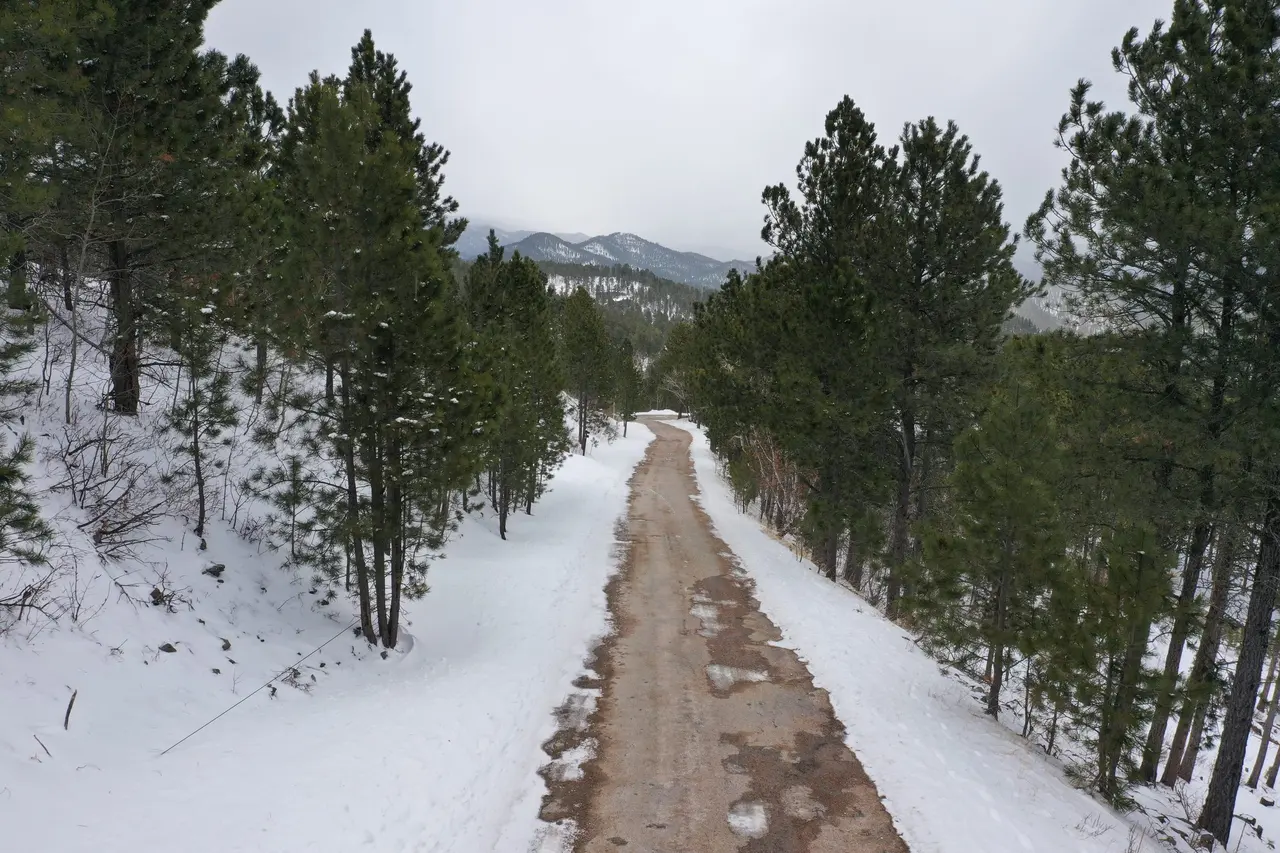
The same storm that dusts Rapid City can close a forest road. Ask these before February does the asking:
- Who plows the last stretch? County, road district, association, a neighbor with a tractor, or the owner. (Check the mirror.)
- Is it on a county route? Pennington County Highway maintains county roads in rural areas and in some unincorporated communities, publishes its snow removal route maps, and says crews prepare to respond when more than 2 inches is forecast. Cities and the state DOT maintain their own roads. A private road is on nobody's route.
- Grade and exposure. A north-facing driveway with a steep pitch holds ice for weeks. I show acreage in winter on purpose when I can.
- Elevation. Snowfall climbs fast with altitude. The community guides on this site carry the numbers for each town; Lead and Deadwood are a different winter than Hermosa.
- Delivery and emergency access. Propane trucks, school buses and ambulances all need to get in. Ask the propane company if they will deliver to the address in winter.
Power, heat, internet and cell
- Power. If the site has no service, call the electric provider for a written line extension estimate before the offer. Distance from the nearest line is the cost driver.
- Heat. Much of the rural Hills heats with propane. Ask whether the tank is owned or leased (the seller disclosure asks this too).
- Internet. It varies road by road: fiber in some rural areas, fixed wireless or satellite in others. Look up the address on the FCC National Broadband Map, then call the provider and ask them to confirm service at that address. Maps overstate coverage.
- Cell. Canyons and draws block signal. Stand on the building site, phone in hand, and check. Working from home? Do a video call from the driveway. Really!
Financing: raw land vs. a home on acreage
These are the differences I see, in general terms, so buyers know what to ask.
| Home on acreage | Raw land | Building | |
|---|---|---|---|
| Typical loan | A regular mortgage, if the house is the main value | A land loan, often from a local bank or credit union, or cash | A construction loan, or construction-to-permanent |
| Down payment | Depends on the program | Usually larger than on a house | Usually larger than on a resale purchase |
| What the lender looks at | The house, plus well, septic and access | Access, utilities, and whether it is buildable | Plans, builder, budget, and the lot |
| Watch for | Appraisers may give limited value to acreage beyond a typical homesite, large shops and outbuildings | Shorter terms than a mortgage | Draw inspections and timeline |
Ask a local lender early. The ones who lend on land here every week know the appraisal and access issues before they come up. Run rough numbers on the mortgage calculator with the rate the lender quotes. More: Buying land and building in the Black Hills.
Before writing an offer: the checklist
Print this. It is the list I work from.
Water
- Well log pulled from the DANR database (or noted as not on file)
- Flow test and lab water test scheduled inside the inspection period
- Shared well agreement, or community water system rates and minutes, in hand
- Meade County: lot is 9 acres or more for a private well, or a water system tap is confirmed in writing
Septic
- County permit and as-built requested
- System size compared with bedroom count
- Inspection with tank pumped scheduled
- Pennington County: Operating License status confirmed with Planning
- Meade County: seller's time-of-sale inspection scheduled
- Bare land: a place for a system confirmed with the county (lot size, soil test)
Access and road
- Recorded legal access confirmed in the title commitment
- Public or private road confirmed
- Written road maintenance agreement or road district documents in hand
- Who plows, and how far, confirmed
Restrictions
- Recorded covenants read, start to finish
- Zoning district, or the county's density rule, confirmed with the planning office
- Inside a city's three-mile platting area? Asked the city.
- Easements on the title commitment located on the ground
- Planned use (shop, animals, second dwelling, rental, split) checked against all of the above
Boundaries
- Corner pins located, or survey ordered
- Fence lines compared with the legal boundary
- Any grazing lease or neighbor use identified
Risk and cost
- FEMA flood map checked
- Insurance quote on the exact address, with wildfire requirements
- Fire district and distance to station identified
- Tax classification confirmed with the Director of Equalization
- Mineral reservations on the title commitment reviewed
- Power, propane, internet and cell checked at the site
Money
- Lender has confirmed the loan type fits this property (acreage, outbuildings, private road)
- Offer includes an inspection period long enough for the well, septic and survey work
Selling land or acreage
Land is harder to market than a house because a buyer can't see what they are buying from the road. So I show them. From the air!
- I fly it myself. I'm an FAA Part 107 certified drone pilot and I was a professional photographer here for over a decade before I sold real estate. The aerial photos and video on my listings are mine. (Also the most fun part of the job.)
- Boundary lines on the photos and video. Buyers want to know where the land starts and stops. I overlay the lot lines on aerial stills and on drone video so they can see it. (Lines are approximate and labeled that way. A survey is the survey.)
- A Land id map on every acreage listing. An interactive map with the parcel boundary, photo points and labels for the well, the building sites, the gates and the road. Where it helps, a 3D property tour built on the same map.
- A single property page. Each listing gets its own page on listings.henryroyrealestate.com with the photos, film, map and documents in one place.
- The file is built before the sign goes up. Well log, septic permit and inspection, covenants, road agreement, survey or plat, tax classification. A buyer's questions get answered with paper on day one, and the ones who make offers have fewer reasons to back out.
- Documented claims. "Can be subdivided," "no covenants" and "great well" only go in my listings when I have the document that says so.
- Pricing. Land comps are thin, and no two parcels match. I price from closed sales in the Black Hills MLS, adjusted for access, water, usable ground, trees and views, and I show the math, line by line.
Thinking about selling? Start with what the property is worth, see how I market a listing, or run the net proceeds calculator.
Where to look: acreage areas on this site
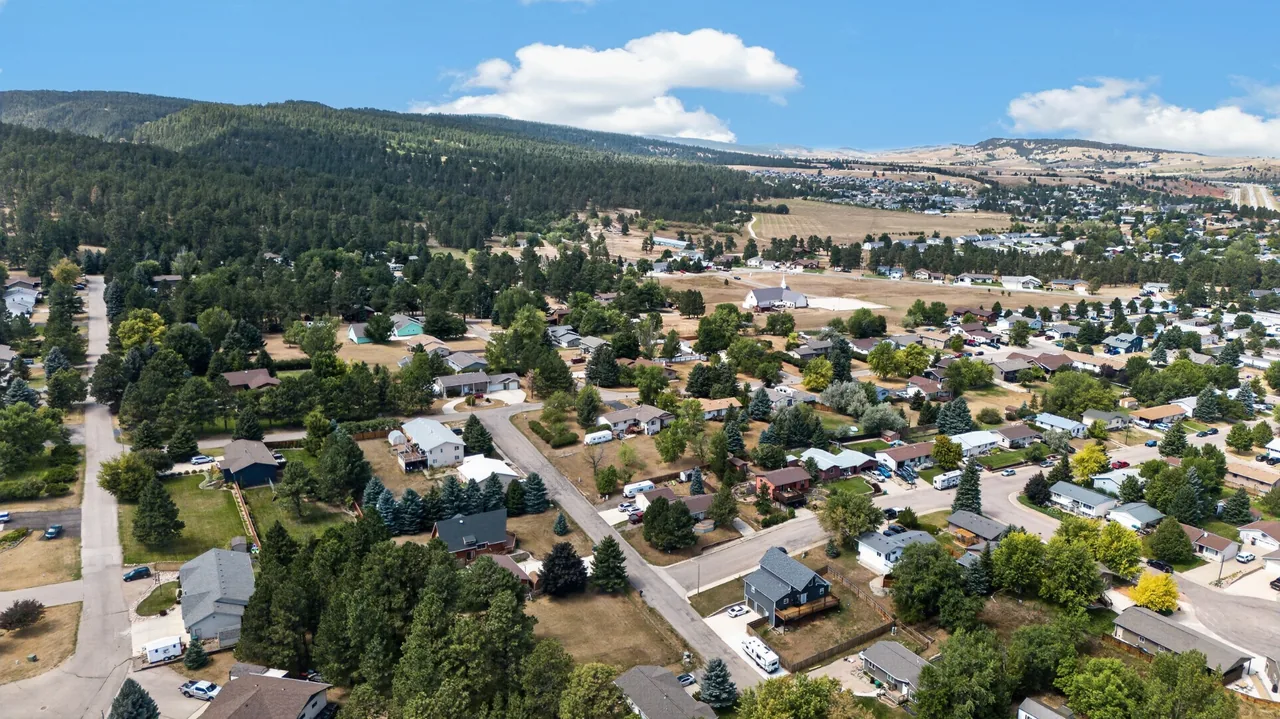
Each of these has its own guide with lot sizes, water and sewer, roads and the numbers.
- Acreage and canyon neighborhoods, ranked by lot size
- Cabins and mountain homes
- Piedmont corridor: Piedmont, Timberwood Park (Northwood Drive, Frontier Loop), Golden Valley (Double Tree Drive), Prairie Haven, Little Elk Canyon
- Rapid City area: Hart Ranch (Clydesdale, Appaloosa), Nemo Road and Rimrock, Rockerville, Colonial Pine Hills
- Sturgis: Vanocker Canyon, Boulder Canyon, Blucksberg Mountain
- Spearfish: Mountain Plains, Lookout Mountain
- Southern Hills: Custer, Hill City, Hermosa, Hot Springs
- Prairie and irrigated ground: Newell, Nisland, St. Onge, Green Valley
FAQ
- Do I need a permit to drill a well in South Dakota?
- For ordinary household use, no water right permit is needed. The state exempts domestic use, generally up to 25,920 gallons a day or a 25 gallon a minute peak pump rate. County rules still apply. In Meade County a private well is not allowed on less than 9 acres.
- How do I find the well log for a property?
- Search the South Dakota DANR Water Well Completion Reports database by map, legal description or county. Drillers were not required to file reports before 1975, so older wells may not be there.
- Does a septic system have to be inspected when a property sells?
- It depends on the county. Meade County requires a seller inspection with the tank pumped within six months before the sale. Pennington County requires a current Operating License before a sale or transfer. I recommend an inspection everywhere.
- How small can a lot be and still have a well and septic?
- The state minimum for a septic system is 20,000 square feet, or one acre when the well is on the same lot. Counties can require more. Lot size alone does not make a site buildable; soil and setbacks decide it.
- What does "no covenants" mean?
- No recorded private restrictions on the land. County or city rules still apply, and the neighbors get the same freedom. (All of it.) Confirm it from the title work, not the listing.
- Who maintains a private road?
- The owners who use it, under whatever agreement or road district exists. South Dakota's seller disclosure asks whether there is a written road maintenance agreement. If there isn't one, find out before closing, and ask the lender whether the loan needs one.
- Can I split off part of my acreage and sell it?
- Sometimes. It depends on the county or city with jurisdiction, minimum lot size, access, water and septic for each lot, and any covenants. Within three miles of a city, the city may control the plat. Get the answer in writing from the planning office.
- Will my land be taxed as agricultural?
- Only if agriculture for profit is its principal use and it meets the state's income or acreage test: $2,500 of gross ag income in three of the last five years, or at least 20 acres, with counties allowed to set a higher acreage minimum.
- Do I have to fence my land to keep the neighbor's cattle out?
- Under South Dakota statute the livestock owner is liable for trespass damage on fenced or unfenced land, and adjoining owners generally split the cost of a partition fence. Read SDCL 43-23 and 40-28, and take the specifics to an attorney.
- Is it harder to get a loan on bare land?
- Usually it is a different loan than a home mortgage, often with a larger down payment and a shorter term, and often through a local bank or credit union. A lender can say what fits.
Sources
Rules checked November 2026. Confirm anything that matters to a purchase with the office that has jurisdiction over the parcel.
- DANR Water Well Completion Reports (map search)
- DANR Well Completion Reports (mobile search and notes)
- DANR Water Rights Program
- DANR, drilling a well
- DANR on-site wastewater (septic)
- Pennington County wastewater systems
- Pennington County snow removal
- Meade County Equalization and Planning
- Meade County Ordinance 33 (PDF)
- Custer County Planning
- Lawrence County (FAQ, septic and permits)
- SD Department of Revenue, property tax
- South Dakota Codified Laws
- SD Wildland Fire, fuels mitigation
- Firewise USA (NFPA)
- FEMA Flood Map Service Center
- FCC National Broadband Map
- Henry's search site, land and lots
Looking at a piece of ground, or thinking about selling one? Send me the address or the legal description and I'll say what I would check first. I answer my phone. Really!
This page is general information, not legal, tax, lending, surveying or engineering advice. Consult the appropriate professional before acting on any of it. Henry Roy is a licensed Broker Associate with Ascend Realty in South Dakota. Equal Housing Opportunity.