
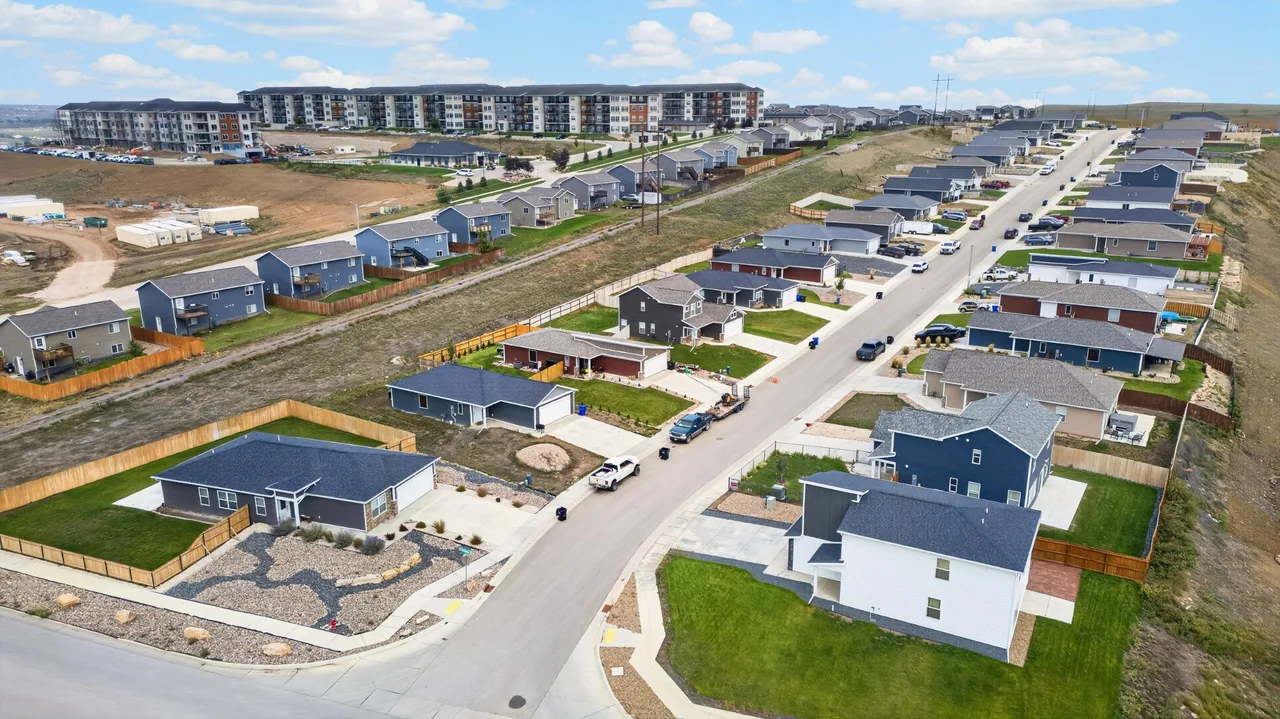
New construction in the Black Hills: building or buying new
Last updated November 2026
New construction is a real share of what sells here, not a niche. Fresh paint! Nobody else's carpet! It is also three different purchases that happen to share a name. Buying a finished spec home is close to buying any other house. Building custom on a privately owned lot is a year-long project with a loan, a permit, a contract and a hillside involved. (The hillside gets a vote.)
This page is how each one works in the Black Hills, where the rules change from one city or county to the next, and what I do for a buyer when the seller is a builder.
Three kinds of new
| Spec home | Semi-custom | Custom | |
|---|---|---|---|
| What it is | The builder picks the plan and finishes and builds it to sell. It gets bought finished or partway through. | The buyer picks from the builder's plans and makes changes and selections, on the builder's lot or the buyer's. | The owner's plan, lot and builder. Designed from scratch. |
| What the buyer controls | Little if it is finished. Some finishes if it gets caught early. | Layout changes within reason, finishes, options. | Nearly everything. |
| Financing | A regular mortgage at closing, like any other house. | Depends on the builder. Some carry the construction, with one closing at the end. Others need the buyer to bring a construction loan. | Usually a construction loan in the buyer's name. |
| Timeline | Shortest. The house exists or soon will. | Middle. | Longest, and the least predictable. |
| Where the risk sits | What the base price includes, and the finish schedule if it is not done. | Allowances and change orders. | The lot, the budget, the weather and a long list of decisions. |
| Homework | Inspection, warranty terms, what is and is not finished (yard, driveway, window coverings). | The contract, the allowance sheet, the selections deadline. | All of it: lot, soils, well and septic, permits, plans, bids, loan draws. |
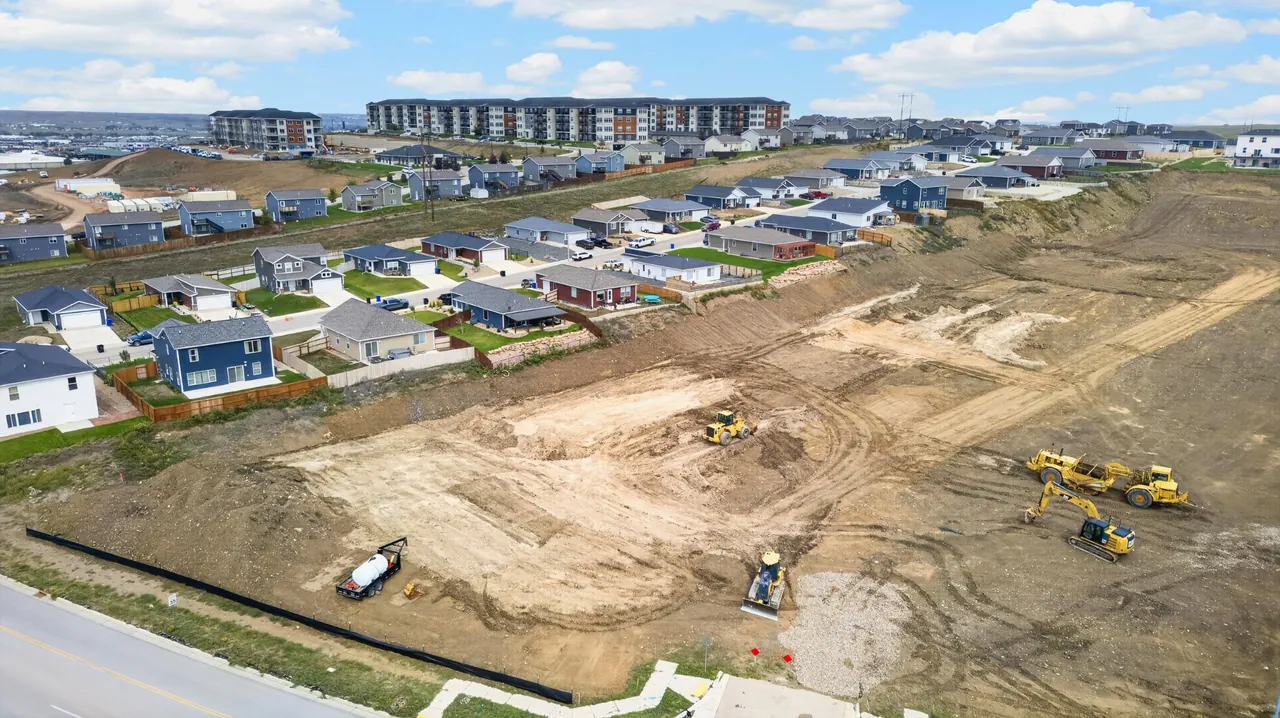
Where new homes are going up right now, and how much of each development is still bare ground, is in the new construction collection. The side-by-side with resale is in new construction vs resale in the Black Hills.
The buyer's agent and the builder
The friendly person in the model home works for the builder. That is their job, and most of them are good at it. (The cookies are good too.) It also means nobody in that room represents the buyer, unless the buyer brings someone.
How buyer representation works on a new build:
- Bring me to the first visit, or tell the builder's rep an agent is involved before registering. Some builders want the buyer's agent on record from the first contact. Ask, do not assume.
- We sign a buyer agency agreement first, the same as on any purchase. It spells out what I do and how I am paid. Compensation has always been negotiable. With a builder, how it is handled is part of the conversation before anybody signs the builder's contract, and I get that answer in writing.
- Builder contracts are the builder's paper. They are not the standard purchase agreement used on resale homes, and they are written to protect the builder. I go through it line by line and flag what I would ask about: deposit terms, what happens if the completion date moves, how price changes on materials are handled, the allowance amounts, the change order process and the warranty. For legal questions about the contract, hire an attorney before signing. It is cheap next to the price of the house.
- I compare the price to the market. New and resale sales both, so it is clear whether the number holds up.
- I stay through the build. Walkthroughs, inspection reports, the punch list and closing.
A note on spec homes specifically: the state treats someone who builds on their own land in order to sell as a prime contractor, so a spec builder needs the state contractor's excise tax license like any other contractor.
Financing, in general terms
This is the vocabulary, so the first call with a lender goes faster.
- Finished or nearly finished spec home: a regular mortgage. Nothing special.
- Construction loan: the Consumer Financial Protection Bureau describes it as usually a short-term loan that covers the cost of building, with the money paid out in a series of advances as construction progresses. Those advances are called draws.
- Two ways it ends: it gets paid off with a separate mortgage when the house is done, or it converts to a regular mortgage. The CFPB's caution is worth repeating: if the loan does not convert automatically, the borrower may have to apply again for the permanent loan. Ask which kind is on the table.
- Land: Lot already owned? Ask how the lender treats it. Buying the lot first? Ask about lot loans, and read buying land and building in the Black Hills.
- First-time buyers: SD Housing says its First-Time Homebuyer loan can be used to build as well as to buy an existing home, through a participating lender. Details are on the buying page.
- VA and FHA: both can be used on new construction, with extra requirements. Not every lender does VA construction loans. Ask before picking a builder. More at VA loans and lenders.
Questions for a lender: Are construction loans made here, and on acreage? One closing or two? What down payment? How do draws and inspections work? What happens if the build runs past the loan term? What is needed from the builder?
Run the end payment on the mortgage calculator with the rate the lender quotes.
The lot decides more than the floor plan
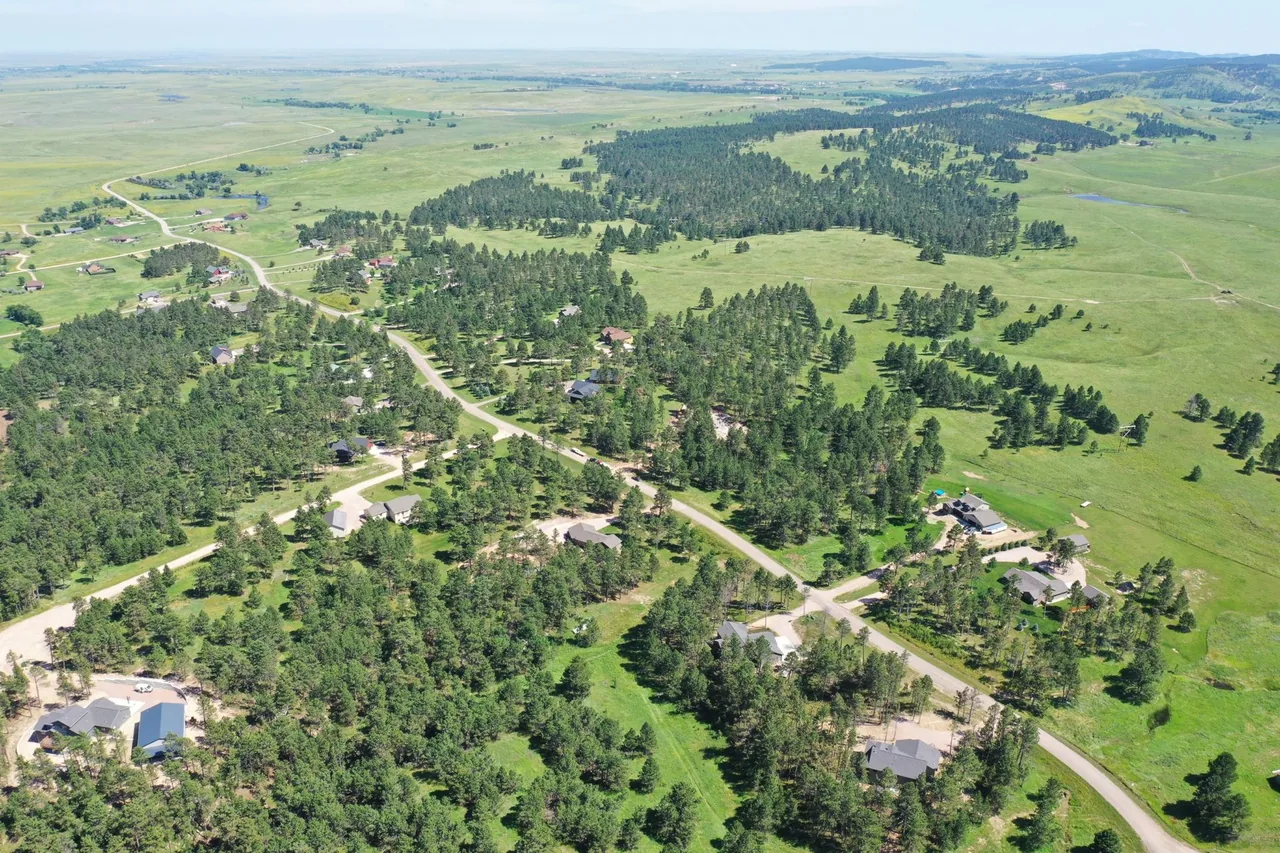
In a finished subdivision with city utilities, the lot questions are short: covenants, drainage, and which way the driveway faces in January. On raw land in the Hills, the lot is the project.
- Covenants. Many subdivisions here have recorded covenants that set minimum square footage, exterior materials, outbuildings and more, with or without an active HOA. Read the recorded document before designing anything. See covenants, HOAs and zoning.
- Rock and slope. Rock near the surface changes the price of a basement, a septic system and a driveway. Get a builder or excavator to walk the lot before closing on it. (The Hills are made of rock. It comes up.)
- Water. City water, a rural water system, or a well. If it is a well, look at well logs nearby before buying. See wells and water systems.
- Wastewater. City sewer or an on-site system. The state sets design rules for septic systems, and Pennington and Meade counties each require their own permit for a new one. See septic systems.
- Access. Legal, recorded access, and who maintains the road. A new driveway onto a county or road district road needs an approach permit in Pennington County.
- Power, gas and internet. Ask each utility what it costs to bring service to the building site. Distance from the road is money.
- Floodplain and drainage. Pennington County has a separate floodplain development permit. Check the map before the offer.
- Wildfire. In the trees, ask an insurance agent for a quote on the lot's address before buying it. See insurance and wildfire risk.
- Can it be split, or has it been split correctly? See can I subdivide my land.
The full land checklist is on acreage and land and in buying acreage in the Black Hills. Land listings: land and lots for sale.
Permits: it depends on which side of the line the lot is
There is no single Black Hills building permit. (That would be too easy.) The city handles it inside city limits and the county handles it outside. The builder normally pulls the permit. It still pays to know who issues it, because that office also answers the questions that matter before buying a lot.
| Where the lot is | Who issues the permit | What their own site says | Contact and link |
|---|---|---|---|
| Rapid City limits | City of Rapid City | Confirm requirements directly with the city. | rcgov.org |
| Box Elder limits | City of Box Elder, Planning and Zoning (which runs Building Services) | Permits and land use applications go through the city's online portal. Building permit checklists are posted. | 605-923-1408, inspections 605-791-8138. Applications and permits |
| Summerset limits | City of Summerset | A permit is required for new construction, additions, alterations, remodeling and repairs. Applications are online. The city inspector inspects footings, foundations, framing and the finished structure. Plumbing and electrical inspections are done by the State of South Dakota. | City office 605-718-9858, building inspection line 605-719-3016 (call 48 hours ahead). Summerset permits |
| Pennington County, outside city limits | Pennington County Planning Department | The department reviews building permits and posts the applications for residential building, on-site wastewater, floodplain and approach permits. A pre-development meeting with county staff is required, to find out which steps apply to the property. | Permits and forms · Development guide |
| Meade County, outside city limits | Meade County Equalization and Planning | A building permit is needed for any structure except accessory buildings of 200 square feet or less and decks of 100 square feet or less. Three inspections are required: foundation, rough framing and final. A certificate of occupancy is required before a new building is occupied. A septic permit is required for any new on-site system. | 605-347-3818. Meade County Equalization and Planning |
Building in Lawrence, Custer, Fall River or Butte County, or inside Spearfish, Sturgis, Custer or Hot Springs? Same idea, different office. Call that city or county planning office before buying the lot. Some cities also review plats in an area outside their limits, which is covered in the subdivide guide.
Five questions for any planning office, before closing on a lot:
- Is this parcel buildable as it sits, or does it need platting or rezoning first?
- What are the setbacks for this zoning?
- What permits will I need besides the building permit (septic, approach, floodplain, grading)?
- What inspections are required, and who does the electrical and plumbing inspections?
- How long is plan review running right now?
Contractor licensing in South Dakota: how it works here
People moving from other states ask to see the builder's state contractor license. Here is what exists in South Dakota, from the agencies themselves.
- Electricians and plumbers are licensed by the state, through the South Dakota Electrical Commission and the South Dakota Plumbing Commission. The Plumbing Commission also licenses septic system installers. The Electrical Commission inspects wiring installations.
- Home builders and general contractors are licensed locally. Summerset requires every contractor to be licensed by the city and to show proof of general liability and workers' compensation insurance. Box Elder requires contractors and subcontractors working in the city to hold a city business license. Meade County requires contractors working in the county to be licensed by the county, with electrical and plumbing contractors exempt. In Rapid City, ask the city's building office what it requires of a builder.
- Every contractor needs a state contractor's excise tax license. The Department of Revenue requires it of anyone doing construction work on real property. The tax is 2 percent of the contractor's gross receipts. The Department notes contractors are allowed to pass it on to the customer, so an excise tax line on a bid is normal. Ask whether the quoted price includes it.
What to ask any builder for, in writing:
- Their license in the city or county where the lot is
- Their South Dakota contractor's excise tax license
- A certificate of insurance showing general liability and workers' compensation
- The names of their licensed electrical and plumbing subcontractors
- Addresses of recent homes they finished, and owners willing to take a call
- How they handle lien waivers from subcontractors and suppliers as they are paid
A license says someone registered and is insured. It does not say they build a good house. The last two items on that list do. (Make the calls!)
Builder warranty basics
A warranty is only as useful as its written terms and the builder standing behind it. Get the document before signing the contract, not at closing.
What the Federal Trade Commission says is typical for new home builder warranties:
- Workmanship and materials on most components: coverage usually ends after the first year.
- HVAC, plumbing and electrical systems: generally two years.
- Major structural defects: some builders cover these for up to ten years.
- Usually not covered: household appliances, small cracks in brick, tile, cement or drywall, and components that carry their own manufacturer's warranty.
- Some builders buy the warranty from an independent third-party company. The FTC notes that FHA and VA require builders to buy a third-party warranty on new homes financed with those loans.
Those are national norms, not a promise about any builder here. What to pin down:
- Is the warranty from the builder, a third-party company, or both?
- What starts the clock: closing, or the certificate of occupancy?
- How do I file a claim, and how fast do they respond?
- Does it transfer if I sell?
- Who warrants the lot work: grading, drainage, the driveway, the septic system, the well?
Keep every manufacturer warranty and manual (roof, windows, furnace, water heater, appliances). Put a reminder on the calendar a month before the first year is up. More on that below.
Yes, inspect a brand new house
The city or county inspector checks for code compliance at set points. That is not the same as someone working for the buyer looking at the quality of the work. New homes have defects. Brand new ones! They are easier and cheaper to fix before the walls are closed and before the deed changes hands.
The three inspections I recommend on a new build:
- Pre-drywall. After framing and the mechanical rough-in, before insulation and drywall. Framing, plumbing, wiring and ductwork are all visible this one time.
- Final, before closing. A full home inspection on the finished house, with time left for the builder to fix what is found.
- Month eleven. A warranty inspection before the first-year coverage runs out, so the list goes to the builder in writing while it still counts.
Ask the builder up front whether their contract allows independent inspections and at which stages. Put it in the contract. A builder who is confident in the work does not mind.
Also on new construction:
- Radon. Test the finished house. Ask whether a passive radon system was roughed in during construction. The EPA says building radon-resistant features in during construction typically costs less than fixing the home afterward. See radon in the Black Hills.
- Well and septic, if the home has them: water test, and the septic permit and final approval paperwork.
- Certificate of occupancy. Get a copy. Meade County, for one, requires it before a new building is occupied.
- The punch list walkthrough. Blue tape, every room, with me there. Get the list and the completion dates in writing.
South Dakota licenses home inspectors through the Real Estate Commission. I read every report with the buyer.
Timeline, without promises
Nobody can promise a completion date on a house that does not exist yet. Be careful with anyone who does! What moves the calendar here:
- Winter. Foundation and exterior work depend on the ground and the weather. A permit pulled in late fall can wait on spring.
- The lot. Rock, a well, a septic system and a long driveway all add steps a finished subdivision lot does not have.
- Plan review and inspections. Each office has its own pace. Ask.
- The buyer's decisions. Late selections and change orders are the one delay a buyer controls.
- The loan. Draw inspections and paperwork take time. A construction loan also has a term. Know what happens if the build outlasts it.
Plan the move around it: do not give notice on a lease or close the sale of a current home based on an estimated completion date alone. Ask the builder what the contract says happens if the date moves, and build in room.
National build-time figures and how they break down are in buying land and building in the Black Hills.
One more calendar item: property taxes here are paid a year behind and are based on the county's assessment, so the first tax bill on a new home may not reflect the finished house yet. Ask the county Director of Equalization what the next bill will be based on, so the later, full bill is not a shock. File for the owner-occupied classification by March 15 once it is home.
- Lot
- Loan
- Plans and permit
- Foundation
- Framing
- Mechanical rough-in
- Insulation and drywall
- Finishes
- Final inspection and certificate of occupancy
- Walkthrough
- Closing
- Warranty year
Decide early, decide later
Some choices are cheap on paper and expensive after drywall. Attention, and upgrade money, go to the left column first. (The backsplash can wait. It always can.)
| Decide before the foundation or framing | Can wait, or can be changed later |
|---|---|
| Basement or not, and ceiling height down there | Paint colors |
| Rough-in plumbing for a future basement bath or wet bar | Light fixtures |
| Garage size, depth and door height | Cabinet hardware |
| Passive radon system under the slab | Faucets |
| Electrical service size, a 240 volt outlet in the garage, a generator hookup | Appliances (if the openings are sized right) |
| Extra outlets, exterior outlets, wiring for network and cameras | Carpet and some flooring |
| Window sizes and placement | Window coverings |
| Insulation level and the heating and cooling system | Landscaping beyond what covenants require |
| Blocking in walls for future grab bars, TVs and shelving | Closet systems |
| Door widths and a no-step entry, for a house that keeps working long term | Backsplash |
| Gas line stubs for a range, grill or fireplace | Deck or patio extras, if the footings and door are planned |
| Where the house sits on the lot, and driveway slope | Fencing |
Three rules for the selections meeting:
- Get the base price features sheet first. Know what the advertised price includes before seeing the model home, because the model is rarely the base package.
- Ask for allowances in dollars, then price the real choices against them.
- Every change after signing is a change order. Get the cost and the effect on the schedule in writing before approving it.
How I help on a new build
- Finding the lot or the development that fits, and sharing what I know about the ground
- Introductions to lenders who do construction loans here
- Reading the builder's contract and features sheet together before anything gets signed
- Pricing the finished home against recent new and resale sales
- Showing up: walkthroughs, inspections, the punch list
- Photos and video of progress for anybody building from out of state
- Closing, and a reminder at month eleven
Legal questions go to an attorney and loan questions go to the lender.
New construction checklist
Before visiting a model home
- Sign a buyer agency agreement and tell the builder an agent is involved
- Get pre-approved, and ask the lender whether they do construction loans
- Decide which of the three paths fits the calendar
Before signing with a builder
- Get the base price features sheet and the allowance amounts in writing
- Read the contract's terms on deposits, price changes, delays and change orders
- Get the written warranty
- Confirm the builder's local license, state excise tax license and insurance
- Call owners of homes the builder finished recently
- Put independent inspections in the contract
Before buying a lot
- Read the recorded covenants
- Call the city or county planning office with the five questions
- Confirm water, wastewater, power and internet
- Have a builder or excavator walk it
- Confirm legal access and road maintenance
- Get an insurance quote for the address
During the build
- Make selections by the deadline
- Get every change order priced in writing
- Pre-drywall inspection
- Keep a folder of permits, inspection sign-offs and warranties
Before closing
- Final independent inspection and radon test
- Punch list walkthrough, with dates in writing
- Copy of the certificate of occupancy
- Compare the Closing Disclosure to the Loan Estimate
- Confirm wiring instructions by phone with the title company
After move-in
- File for owner-occupied status by March 15
- Register appliance and equipment warranties
- Schedule the month eleven inspection
Common questions
- Do I need my own agent to buy from a builder?
- Nobody is required to have one, but the builder's sales rep works for the builder. I represent the buyer: I go through the contract and features sheet, compare the price to recent sales, and stay through inspections and closing.
- What is the difference between a spec home and a custom home?
- A spec home is planned and built by the builder to sell, and it gets bought finished or close to it. A custom home is designed for one owner and built on that owner's lot. Semi-custom sits between them: the builder's plan with the buyer's changes.
- Does South Dakota license home builders?
- The state licenses electricians and plumbers. Builders and general contractors are licensed locally where a city or county requires it, as Summerset and Meade County do (Box Elder requires a city business license), and every contractor needs a state contractor's excise tax license. Ask to see both.
- Who issues building permits in the Black Hills?
- The city, if the lot is inside city limits, and the county planning office if it is not. Rapid City, Box Elder, Summerset, Pennington County and Meade County each run their own process.
- How does a construction loan work?
- The Consumer Financial Protection Bureau describes it as a short-term loan that pays for the build in a series of advances as work is completed. It is then paid off or converted into a regular mortgage. Ask a lender which type they offer.
- What does a builder warranty cover?
- It depends on the written warranty. The FTC says coverage commonly runs one year for workmanship and materials, about two years for HVAC, plumbing and electrical systems, and up to ten years for major structural defects with some builders.
- Should I get a new house inspected?
- Yes. A code inspection is not a quality inspection. I recommend one before drywall, one before closing and one in month eleven, before the first-year warranty ends.
- How long does it take to build a house in the Black Hills?
- It depends on the type of build, the lot, the season and how fast decisions get made. A finished spec home can close like any other house. A custom home on raw land takes the longest. Get the builder's estimate in writing and plan for it to move.
- Can I use a first-time buyer program on a new home?
- SD Housing says its First-Time Homebuyer loan can be used to build or to buy an existing home, through a participating lender, within its income and price limits. Confirm current terms with the lender.
- What upgrades should I choose first?
- The ones that are hard to change later: basement and rough-in plumbing, garage size, electrical capacity, windows, insulation, heating and cooling, and a passive radon system. Finishes like paint, fixtures and hardware can be changed any time.
Thinking about building, or looking at a builder's model this weekend? Call me first! Ten minutes now is cheaper than a change order later.