
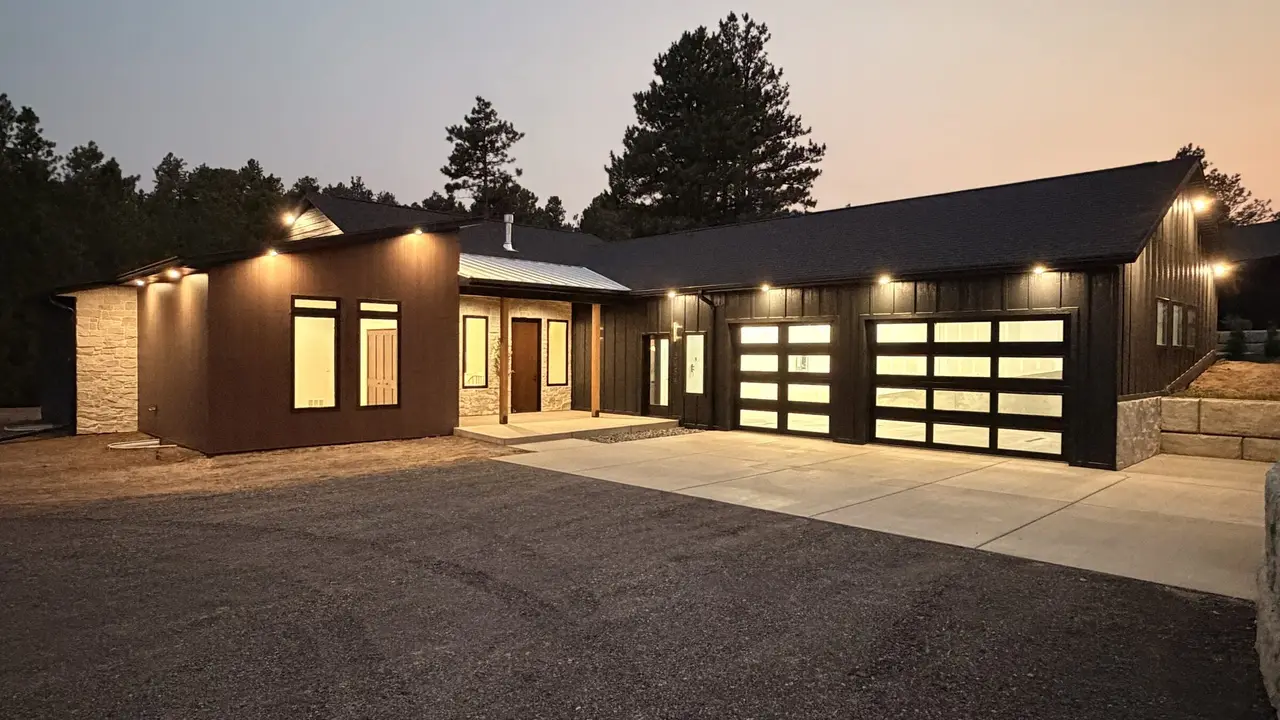
Before I sold a single house in the Black Hills, I spent more than a decade behind a camera shooting listings for other agents, more than fifty of them across this region. That means I have stood in more living rooms, kitchens, and basements than most people will see in a lifetime, and the job was always the same: make a buyer stop scrolling. That background changed the way I think about selling a home today, because photography was never decoration to me. It is the first test a listing faces, long before anyone drives past the yard sign.
The test happens online, before anyone touches a doorknob
According to the National Association of Realtors, roughly 46 percent of recent buyers started their home search online, more than any other first step, and among the digital tools buyers rated as useful, photos topped the list at 81 percent, ahead of detailed property information, floor plans, and virtual tours. That lines up with what I watched happen from behind a camera for years: a buyer decides whether a house is worth a showing based on a screen, not a sign. Agents sometimes talk about photography like it is marketing flourish, something you add once the real work of pricing and listing is done. I see it the other way. The photos are the showing that almost every buyer attends first, and most of the houses that never get a second look lost that first one on their own listing photos.
Light is not optional, and it is not negotiable on my schedule
The single biggest lesson from years of shooting other people's listings is that every house has a time of day it wants to be photographed, and that time is rarely convenient. A home with west-facing living room windows and a view of the Hills wants late afternoon light pouring through the glass. A kitchen with north-facing windows photographs cleanly almost any time of day because the light stays even and soft. A home that backs to open land or a ridge line often looks its best right at dusk, when the sky still holds color and the interior lights are warm against it. Not every house peaks at twilight, and shooting everything at golden hour because it sounds romantic is how you end up with inconsistent, overly dramatic photos on a house that actually shows best in flat midday light.
That is the piece I bring that a single standard shoot time cannot. I scout the house ahead of the shoot, figure out which rooms and which exterior angles want which light, and build the shoot day around the house's orientation rather than my calendar. On acreage and view properties especially, I will come back for a dusk shot specifically because the land and the setting are a meaningful part of what someone is buying, and that does not read the same way at ten in the morning.
What a camera can fix, and what it genuinely cannot
Part of my job before the shutter ever clicks is prep, and I am direct with sellers about which problems a camera solves and which ones it does not. A cluttered counter, a closet door left open, personal photos crowding a hallway: those are fixable in the ten minutes before I start shooting. A room that is simply too full of furniture to read its actual size is not something lighting or a wide lens corrects honestly, and photographing it anyway just sets a buyer up to feel disappointed the moment they walk in, which is the opposite of what good photography is supposed to do.
This is where staging earns its place in the conversation, and in my experience it helps in a lot of cases, though not every home needs the same amount of it. Sometimes that means bringing in furniture for a vacant house so a buyer can read scale and purpose in an empty room. Sometimes it means editing down what a seller already has rather than adding anything at all. I figure out which one a specific home needs when I walk it, not from a standard checklist, because an empty staging budget spent in the wrong room does less for a listing than a free afternoon spent simply clearing counters and hiding cords.
Preparation, staging, and photography are not three separate boxes to check before a listing goes live. Together they are aimed at one outcome: the goal is to provoke a feeling in a buyer before they have read a single fact about square footage or bedroom count. Buyers decide how a house feels in the first several photos, and they spend the rest of the showing looking for reasons to justify that feeling, good or bad.
What the research actually shows
I do not need to rely only on my own years behind the camera to make this case, because the data on this is well documented. Redfin's analysis of listing photography found that homes marketed with professional photography sold for between $3,400 and $11,200 more than comparable homes without it, depending on the price range, and that listings with professional photos received 118 percent more online views than listings without them. VHT Studios, one of the larger real estate photography firms in the country, found that professionally photographed homes sold roughly 32 percent faster. None of that is a guarantee for any specific house, and plenty of other factors decide a sale, but it is consistent with what I watched for years shooting listings for other agents: the homes with thoughtful, well lit photography simply got more traffic, and more traffic is what turns into showings and offers.
Drone work, and when it earns a place in the file
Drone photography has gone from a novelty to something close to standard, and for the right property it genuinely changes what a buyer understands about what they are purchasing. Industry survey data compiled by real estate photography firms puts drone adoption among active listing agents at around 80 percent, and listings that include aerial photography have been reported to sell meaningfully faster than listings without it. On a lot of Black Hills properties, that matters more than it would on a standard city lot, because the land itself, the acreage, the tree line, how a property sits relative to a ridge or a drainage, is often a real part of the value and simply cannot be shown from the ground. I am FAA Part 107 licensed to fly commercially, and I use drone and twilight work whenever it genuinely serves the property, not as a default add-on for every listing regardless of whether there is anything up there worth showing.
What a shoot day actually looks like
By the time I show up with a camera, most of the real work has already happened. I have walked the house, talked through what needs to move, be packed away, or be staged, and scheduled the shoot for the light that specific home wants rather than whatever slot was open that week. On the day itself, interiors get shot with proper lighting rather than a single wide angle lens doing all the work, because a wide lens that distorts a room reads as a trick the moment a buyer walks in and the space feels smaller than the photo promised. Exteriors get shot for the angle that best shows the lot and the setting, not just the front door. If drone or twilight photography belongs on that particular listing, I schedule it for the window that actually works, sometimes a separate trip back at dusk rather than squeezing it into the same hour as the interior shoot.
None of this is about more photos for the sake of volume. It is about the right photos, sequenced so the story of the house builds the way a buyer would actually want to walk through it, kitchen flowing into living space, the yard and the view landing where they carry the most weight.
Why this matters more here than in a lot of markets
A flat suburban subdivision with similar homes on similar lots does not depend as heavily on photography to tell its story, because the houses mostly look like what you expect. The Black Hills is a different kind of market. I write often about how automated value estimates struggle here because this region does not price out the way a tract subdivision does, and the same thing is true of photography. A custom build tucked into a hillside, a property with real acreage and a shop, a home with a view corridor that took years to find: these are not homes a generic photo package can represent fairly. The photography has to do the work of explaining what makes that specific property different, because the listing description alone will not carry it, and a buyer scrolling through search results online has no other way to understand what they are looking at.
This is the same philosophy I bring to how I market a luxury listing in the Black Hills, just applied at every price point rather than only the top of the market. A $320,000 starter home on a quiet street deserves the same honest, well lit photography as a custom home on acreage, because the buyer looking at that $320,000 listing is making just as real a decision, and they deserve photos that actually show them what they are considering.
What I tell sellers before we ever schedule the shoot
Plan around the season and the orientation of the house, not just the calendar date you had in mind. If we are aiming for an April or May launch, I want to walk the property well before that so there is time to prep properly rather than rushing a shoot the week before photos are due. Do the decluttering and the small fixes before I ever show up with a camera, because that work changes what the photos can honestly show far more than anything I do with a lens. And trust the process on timing. A dusk shot scheduled two weeks out because that is when the light actually works is not me dragging my feet. It is me trying to get your home one real shot instead of a passable one.
The bottom line
Photography is not the last step before a listing goes live. It is the first impression nearly every buyer forms, and for a lot of Black Hills properties it is the only honest way to show what actually makes a place worth the drive out to see it in person. I built my entire approach to listing photography around years of learning what a camera can and cannot do for a house, and I bring that same approach to every listing I take, not only the ones at the top of the market.
If you are thinking about listing and want to talk through what your home's photography should actually look like before you commit to a date, start with an honest read on what your home is worth or visit my seller's guide for the rest of how I approach a listing from first conversation to closing. I would rather walk your property and tell you what it needs than hand you a one-size-fits-all answer.
Last updated November 10, 2026
The Black Hills Seller's Guide
What I do before a home goes live, how I price against real closings, and the marketing that separates a strong sale from a slow one.
Get The GuideQuestions? Call or message me.
The fastest way to reach me is the phone. Call or text 605-490-2040 and you will get me or a call back, usually the same day. If writing is easier, send a note and tell me what you are working on.
Related reading
Why automated estimates disagree so much here, what a real comparative market analysis involves, and how pricing drives days on market.
Photography curated to the home, property film, premium portal placements, targeted digital campaigns, and pricing built on evidence.
National research points to one specific week each spring. Our winters, Ellsworth AFB's PCS calendar, and our own Rally season pull that timing around here. Here is how I actually plan a launch date in the Black Hills.
The region's hub for jobs, medicine, dining and flights, within an easy commute of Ellsworth Air Force Base.
One of South Dakota's fastest growing towns, with a university, a canyon out the back door and a downtown you can walk across.
A small foothills city on I-90, about 26 minutes north of downtown Rapid City.
My free seller's guide, covering pricing against real closings, preparation and the launch plan.
How I price a home here, and where online estimates fall short.