
Every week someone tells me a website says their home is worth one number, their neighbor says another, and the county says something else entirely. All three can be defensible and all three can be wrong, because value is not a fact printed on a house. It is what a ready buyer will pay for your specific property, in this month's market, given how it is presented and priced.
Here is how I think about that question, and how I answer it for sellers in Rapid City and across the Black Hills.
Why automated estimates vary so much here
An automated valuation model is a statistics engine. It looks for recent sales that resemble your home, weighs the differences, and produces an estimate with a confidence range. Feed it a subdivision where fifty houses share three floor plans and it does a decent job, because there is real data to lean on and the differences between homes are small and measurable.
Now feed it the Black Hills. A single road can hold a modest home on a city lot, a 1970s ranch on two acres with a detached shop, and a custom build tucked into a hillside with a view corridor that took the owner two years to find. Those are not variations on a theme. They are different products serving different buyers, and there may not be a truly comparable sale within several miles or several months.
When the model runs out of good comparable sales, it does not stop. It widens its net, reaches farther out, and leans harder on square footage and bedroom counts, which are the crudest possible measures of a home like yours. That is how you end up with a spread of tens of thousands of dollars between one site and another for the same address. The models are not being careless. They are being asked a question their data cannot answer.
County assessments are a separate thing entirely. A Director of Equalization is assessing for tax purposes on a schedule, not marketing your home to buyers this spring, so your assessed value is not a listing price and was never intended to be one.
The features algorithms consistently miss in our market
These are the specific things I see automated estimates get wrong here, over and over.
Acreage that is not all equal. Ten acres of usable, fenced, gently sloping ground and ten acres of steep timber carry very different values, and an algorithm sees the same number in the same field. Buyers do not. They ask where the building envelope is, whether a horse could use it, and how much of it they can mow, ride or hunt.
Views, and whether they are protected. A view is worth real money in the Hills, and its durability matters as much as its beauty. If the terrain behind you cannot be built on, that is a permanent feature. If the open ground across the road is a platted phase awaiting development, that is a temporary one. No model knows the difference. It cannot see out your windows.
Outbuildings and shop space. Heated, insulated, powered, with a floor drain, tall enough for an RV, on a concrete apron a truck can turn on: that is a functional shop and to a large slice of Black Hills buyers it can be the reason they choose your home. An unheated pole barn with a dirt floor is storage. Both often show up as "outbuilding" in the data, if they show up at all.
Access and winter reality. Whether your road is county maintained, association maintained, or maintained by whoever gets to it first is a value factor here. So is the grade of the last quarter mile in February. Buyers who have lived through a Black Hills winter ask about it in the first five minutes.
Wells, septic and utilities. A strong well with good water quality and a recently updated septic system is a selling point. A shared well with a thin agreement, or a system sized for fewer bedrooms than the home now has, is a negotiation point. Either way, this is inspection-period territory and no algorithm has ever pulled a well log. I wrote about the acreage due diligence I run in Buying Acreage in the Black Hills.
One of a kind homes. Custom architecture, unusual layouts, exceptional craftsmanship and true luxury properties are the hardest cases for models and the most rewarding to market properly. When there are three plausible comparable sales instead of thirty, judgment matters more than math.
Condition and finish level. Two homes with identical square footage, one with original 1990s finishes and one thoughtfully updated throughout, will not sell for the same price. Public records do not know what your kitchen looks like.
What a comparative market analysis involves
A CMA is not an average. When I prepare one for your home, I am doing this:
I start with closed sales, usually within the last three to six months, and I read each one rather than counting it. What was the finish level, how was it presented, did it sell with concessions, was it a relocation seller in a hurry or an estate sale, and how far is it from you in terms of school district, drive time and character rather than raw miles.
Then I look at what is active right now, because those are the homes competing for your buyer. Pending sales tell me which price bands are moving. Expired and withdrawn listings are the most underrated data in the file, because they show exactly where buyers said no.
Then I adjust, in writing, for the things that differ: lot size and usability, shop and garage space, view, finish level, mechanical age, basement type and finish, and access. I show you the adjustments so you can push back on them. If you think I undervalued the shop, tell me. You know your home better than I do.
Then I bring you a range, not a single magic number, plus a recommended list price and the reasoning behind it. Alongside it you get a net sheet at several price points so you can see likely proceeds after commission, taxes, title and typical concessions, because your real question is not what the house lists for. It is what you walk away with. You can start the whole process with an instant estimate on my home value page, which I then review with you personally.
How pricing strategy affects days on market and final price
This is the part sellers underestimate, so let me be direct about it.
Your listing gets its largest, cheapest burst of attention in its first week or two. That is when the portals push it as new, when every buyer with a saved search gets an alert, when agents notice it, and when my launch marketing hits hardest. Priced correctly, that surge produces showings, and showings produce offers while the home still feels fresh.
Priced above what the evidence supports, that same surge produces something worse than nothing: it produces a lot of buyers deciding your home is overpriced. They do not call to negotiate. They just move on. Then the listing goes quiet, and the seller starts chasing the market down in increments. Cut, wait, cut, wait. Each reduction signals weakness, days on market accumulate, and by the time the price is finally right the home carries a story. Buyers who show up late ask what is wrong with it and write accordingly.
The pattern I see is consistent. Homes that sell near asking price generally sold in their first few weeks at a defensible number. Homes that sell well under asking price usually spent months getting there. Aggressive pricing does not create value, it consumes the only free advertising a listing ever gets.
None of that means underpricing is clever either. It means pricing to the evidence, launching with presentation strong enough that the price feels justified in the photos, and then reading the weekly numbers honestly. If impressions and clicks are strong but showings are not, the market is telling us something about price. If nobody is clicking at all, that is a presentation problem and it is mine to fix. Either way we look at the same report and decide together. That is how my listing process is built.
Presentation, and why I keep bringing it up
Before I sold real estate I photographed it, for years and for dozens of agents. Standing in hundreds of homes with a camera and no commission at stake teaches you something uncomfortable: buyers form an opinion about value in the first three photos, before they read a single detail.
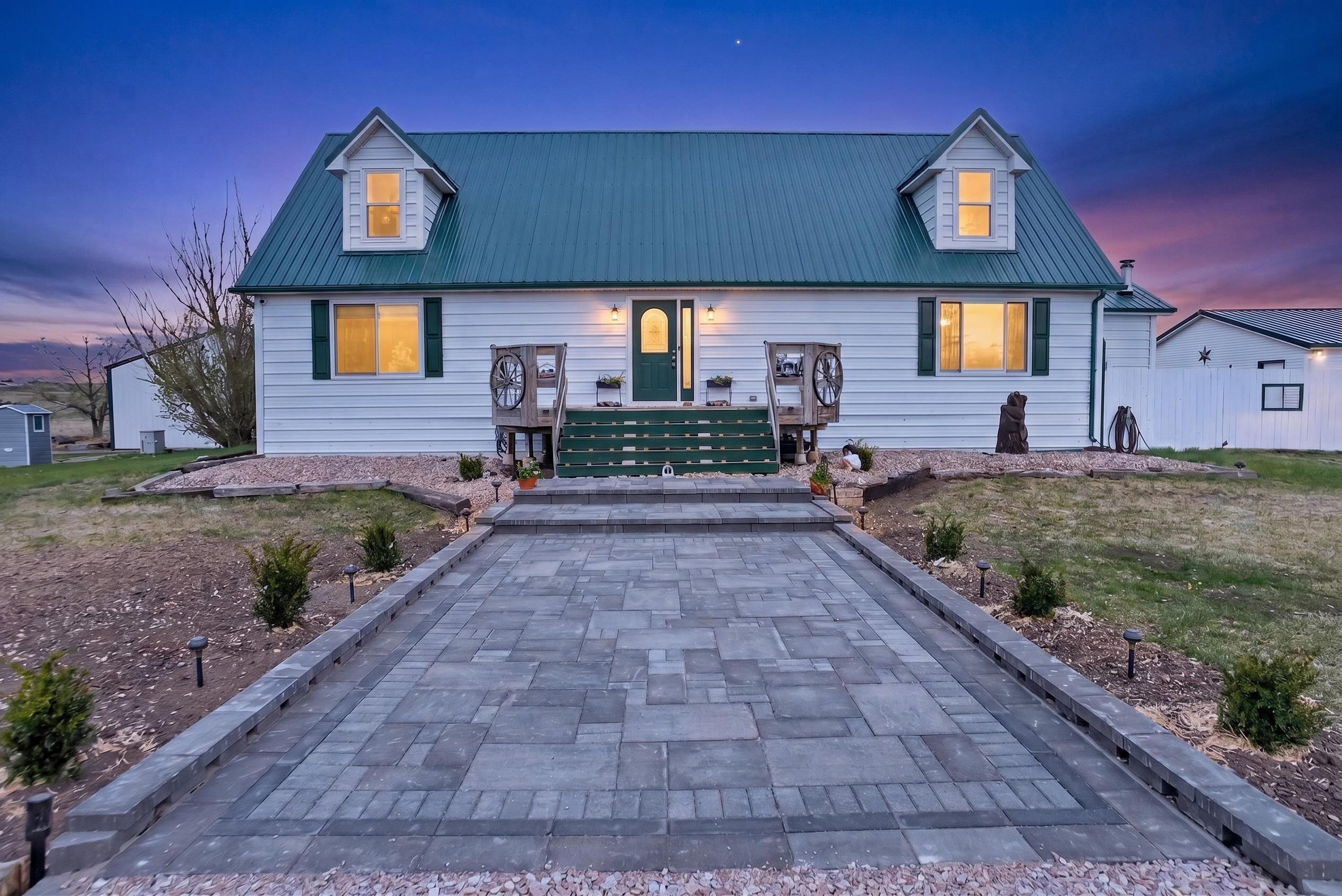
Same house, wrong hour of day, cluttered counters, photos in a random order: buyers see a tired home and price it that way in their heads. Same house shot when the light works, prepped thoughtfully, sequenced so the story builds: buyers see a cared for home. The house did not change. The perceived value did, and perceived value is what shows up in offers. That is why I treat photography and prep as pricing tools rather than decoration.
Staging belongs in that same sentence. It helps in a lot of cases, and whether your specific home needs it is a conversation we have together after I walk it, because the right answer ranges from a full stage to a few rented pieces to simply editing what you already own. Preparation, staging and photography are all aimed at one thing: we want to provoke a feeling. Buyers buy the feeling, then they justify it with the square footage.
Start with a number, then let a person read it
Use the instant estimate. It is fast, it is free, and it gives us something concrete to react to. Then let me review it against the sales an algorithm cannot interpret, walk your property with you, and tell you what I believe the market will do with your home.
If you are weighing a move and want to know your options in a specific town, my community guides go into detail on the local markets, including Rapid City and Summerset. When you are ready for a number you can plan around, start on my home value page or just call me.
Last updated August 9, 2026
The Black Hills Seller's Guide
What I do before a home goes live, how I price against real closings, and the marketing that separates a strong sale from a slow one.
Get The GuideQuestions? Call or message me.
The fastest way to reach me is the phone. Call or text 605-490-2040 and you will get me or a call back, usually the same day. If writing is easier, send a note and tell me what you are working on.
Related reading
Photography curated to the home, property film, premium portal placements, targeted digital campaigns, and pricing built on evidence.
No state income tax, assessments at market value, and one classification you must apply for after you buy. That last step is the one buyers miss most.
The region's hub for jobs, medicine, dining and flights, within an easy commute of Ellsworth Air Force Base.
A recently incorporated city on I-90 between Rapid City and Sturgis, with the newest construction pipeline in the northern hills.
One of South Dakota's fastest growing towns, with a university, a canyon out the back door and a downtown you can walk across.
My free seller's guide, covering pricing against real closings, preparation and the launch plan.
How I price a home here, and where online estimates fall short.